
Overview
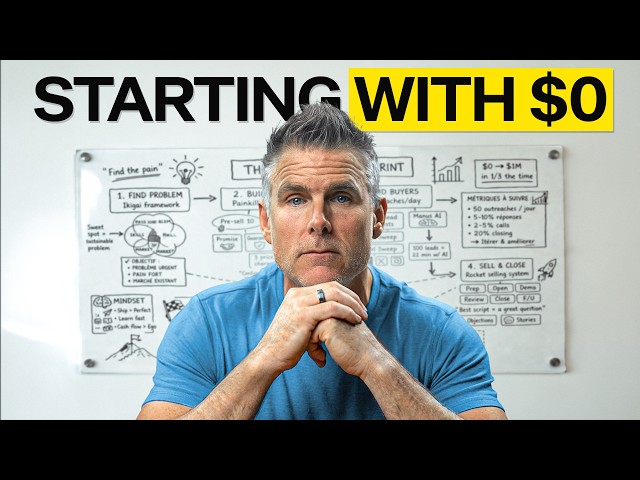
Building a thriving business from nothing is more possible today than ever beforethanks to AI and smarter approaches to entrepreneurship. Whether you have no money, no education, or are just starting out, you can leverage technology and proven strategies to create sustainable success. In this guide, we break down the six fundamental steps you need to take to launch your businessfrom identifying a valuable problem, to delivering fast value for your customers. Let’s explore the blueprint that can turn your idea into a profitable reality.
1. Find What to Build: Focus on Problems, Not Passions
The journey doesn’t start with following your heart; it starts by solving genuine, painful problems. Instead of looking for a passion project, look for a problem that people are eager to pay someone to solve. People will always pay for ‘painkillers’solutions that ease their difficultiesrather than for ‘vitamins’ that are merely nice to have.
A helpful framework for this is the Japanese concept of Ikigai. It involves four main circles: what you love, what you’re good at, what the world needs, and what people will pay for. Your business idea should sit where all four circles overlap. But this isn’t just a self-discovery exercise; it’s practical market validation. Use AI tools to interview yourself and unearth your own ikigai, uncovering blind spots and focusing on solutions, not just interests.
Remember, your business truly starts the moment you sell something to a stranger. Move quicklysell early, and don’t waste time perfecting an idea before testing if it’s marketable.
2. Build an Irresistible Offer
Having a great idea is just the start; turning it into an offer the market can’t refuse is essential. Customers don’t buy featuresthey buy solutions that transform their lives or businesses.
A compelling offer should have:
- Clear Promise: Focus on the transformation or result your customer will achieve.
- Guarantee: Offer risk reversal, such as a money-back guarantee, to minimize their perceived risk.
- Bonus: Include extras that directly address your target customers’ biggest pre-purchase objections.
- Internal Scarcity: Instead of artificial limits, help potential clients realize the cost of not acting now, making the decision personally urgent.
Price your services or products higher than you feel comfortable. Underpricing can attract low-quality clients and leave you resenting the work. Use three-tiered pricingwith a premium anchor, a main offer, and a lower-end optionto guide buyers toward your preferred product.
Leverage AI to draft, test, and refine your offer before pitching it to real prospects. Simulate skeptical customers and objections to fortify your proposal.
3. Find the Buyers: Proactive Outreach & Smart Tools
Once your offer is ready, don’t sit back and wait. Go where your potential buyers are and reach out. Thanks to AI, building targeted lists and personalizing outreach can be scaled rapidlypotentially growing your daily outreach from a handful to dozens or more.
Utilize AI-powered platforms to zero in on your ideal clients. These tools can:
- Ask the right questions to clarify your target market.
- Provide you with names, contact details, and even draft personalized outreach messages.
- Scan your existing network, social contacts, and CRM to uncover warm leads.
Effective outreach is tailored, timely, and relevantAI helps you make each connection count, increasing your response and conversion rates.
4. Master the Art of Selling: Guide, Don’t Push
Sales isn’t about delivering a perfect pitch; it’s about asking the right questions so the prospect convinces themselves. The most successful sales conversations are structured like a staircasefrom the prospect’s current struggles (hell) to their goals (heaven), with your solution as the steps between them.
Use a structured process to guide the conversation:
- Setup: Research the prospect and look for shared interests or uncommon commonalities.
- Customer Understanding: Ask about their business and context.
- Decision Triggers: Explore why now is the right time to talk.
- Results: Get them to envision success with your solution.
- Reality Check: Dig into their current issues and frustrations.
- Roadblocks: Identify what’s blocking progress.
- Present Your Model: Show how your unique approach addresses their needs.
- Offer Recap: Repeat their stated desires and link them to your offer.
- Close: Ask for the sale confidently if they’re a good fit.
Practice with AI-driven roleplay to refine your approach and handle objections, ensuring you’re well-prepared for real conversations.
5. Deliver Value Fast: Onboarding and Early Wins
The sale isn’t won when the payment is madeit’s secured by how quickly you deliver value. The faster you move your customer from purchase to seeing real results (known as ‘time to first value’), the more likely they are to stick around and even refer others.
Use AI to automate your onboarding process:
- Create and send a tailored client questionnaire right after purchase.
- Feed those responses into an AI tool to generate a personalized roadmap for their success.
- Keep them engaged and confident they made the right decision from day one.
This proactive approach not only reduces buyer’s remorse but also differentiates your business through superior client experience.
6. Go Now: Action Beats Perfection
The final stepand often the hardestis to simply start. Don’t get caught in the trap of endless planning. Every successful entrepreneur began before they were fully ready. Start creating, iterating, and learning. Your first version won’t be perfect, but momentum and feedback will help you refine your business much faster than overthinking and waiting for the perfect plan.
Conclusion
Launching a business in today’s AI-driven world is less about resources and more about mindset and execution. Start by identifying a real problem, craft a compelling offer, seek out buyers actively, master consultative selling, and deliver rapid value from the start. The most important element is to movetake imperfect action, stay adaptable, and believe in the transformative power of small, consistent steps. If others can turn their lives around and succeed, so can you.
Note: This blog is written and based on a YouTube video. Orignal creator video below: