Overview
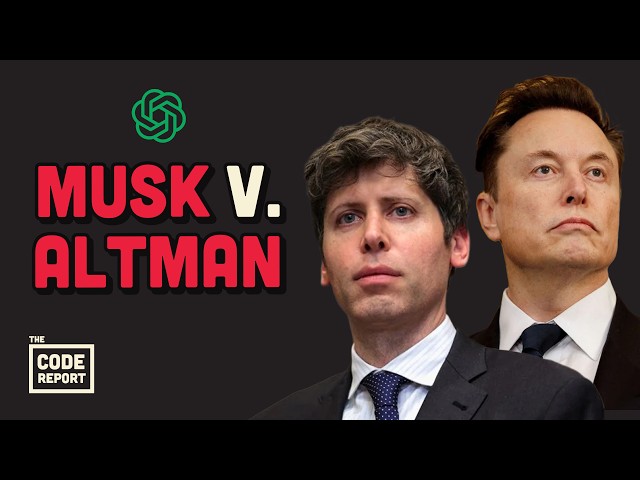
The high-stakes legal showdown between Elon Musk and Sam Altman has captured the attention of Silicon Valley and the world. With a $134 billion lawsuit in play, this courtroom drama unravels more than just the future of OpenAIit delves into the origins of one of tech’s most influential nonprofit ventures, its controversial pivot to profitability, and the personal rivalries fueling the battle. Dive in for a detailed breakdown of the Musk vs. Altman trial, its key players, and what this means for the landscape of artificial intelligence.
The Genesis of a Tech Powerhouseand a Rivalry
The story of OpenAI began in 2015 when Elon Musk, Sam Altman, Greg Brockman, and Ilya Sutskever founded the organization with a mission to safeguard humanity from the potential dangers of artificial intelligence. Founded as a nonprofit committed to open-source ideals, OpenAI attracted donations from high-profile figures, including a $38 million contribution from Musk himself.
However, the vision for OpenAI’s future quickly became fractured. Tensions peaked when Musk attempted to take over leadership in 2018, aiming to transform OpenAI into a for-profit entity with himself as CEO and majority shareholder. The co-founders pushed back, advocating for equal ownership, which led Musk to step down from the board and eventually take his ambitions to the newly-formed xAI.
OpenAI’s Pivot: From Nonprofit to Power Player
Between 2019 and 2021, OpenAI underwent a significant structural transformation. By attaching a for-profit subsidiary to its nonprofit entity, OpenAI secured massive investments, most notably a $13 billion check from Microsoft. This infusion of capital catapulted the company to a nearly trillion-dollar valuation, sparking both awe and controversy in equal measure.
Satya Nadella, Microsoft’s CEO, initially expressed skepticism over the partnership, but he later doubled down, concerned that Microsoft could fall behind in the AI race. Meanwhile, former OpenAI board member Shivon Zilisalso the mother of several of Musk’s childrenprovided inside information on OpenAI’s operations, posing clear conflicts of interest as Musk launched his rival, xAI.
The Lawsuit: $134 Billion and Claims of Betrayal
Unable to ignore OpenAI’s success and its drift from original ideals, Musk filed a lawsuit in 2024 against Sam Altman, Greg Brockman, OpenAI, and Microsoft. Musk’s claim: the founders breached a charitable trust, stealing an open-source charity and morphing it into a closed-source “money printer.” He seeks the unwinding of OpenAI’s for-profit conversion, removal of Altman and Brockman, and a $134 billion disgorgement.
Throughout the trial, the discovery process has unleashed a trove of private text messages, emails, and even diary entries from key executives. These communications shed light on pivotal momentslike the debates over OpenAI’s name (with Musk favoring “Freethink” and Altman “Axon”), extravagant gatherings in a San Francisco mansion, and gifts of Tesla Model 3s in attempts to sway allegiances.
Infighting, Firings, and Boardroom Drama
The chaos didn’t stop with the organization’s structural changes. In November 2023, Sam Altman was fired from his role at OpenAI after allegations of dishonesty and encouraging internal conflict, as detailed in a memo by Ilya Sutskever. Interim CEO Mira Murati delivered the infamous verdict: “Directionally, very bad.” Yet, after only four days and immense support from OpenAI employees and industry leaders, Altman returned to the helm, stabilizing the company but leaving scars from the leadership crisis.
Key Arguments in Court
The closing arguments in the Musk vs. Altman trial have been dramatic. Represented by legal teams, Musk’s side asserts that Altman and Brockman breached their fiduciary duties, arguing that personal enrichment and secretive deals corrupted OpenAI’s mission. Conversely, OpenAI’s defense highlights Musk’s previous efforts to shift the organization to a for-profit model himself, as well as his “selective amnesia” regarding his own ambitions within the company.
Legal observers note the trial is ultimately decided by Judge Yvonne Gonzalez Rogers, whose background and prior statements suggest skepticism toward Musk’s claims. Historical evidence undercuts Musk’s legal position: There was no contract binding OpenAI to perpetual nonprofit status, and Musk’s own xAI has borrowedif not outright appropriatedOpenAI technology, complicating his arguments about ethical stewardship.
The Odds and the Outcome
Speculation abounds regarding the final verdict. Prediction markets give Musk a slim chance of victory, estimating his odds at 32% or lower. The real power lies with the judge, and the legal consensus suggests Musk’s case is weaker than his public persona might indicate. Even with perceive wrongdoing within OpenAI, the lack of contractual guarantees and Musk’s contradictory actions may doom the lawsuit.
What This Means for AI’s Future
The Musk vs. Altman trial exemplifies the high-stakes world of artificial intelligence, where idealism, personal ambition, and massive financial interests intersect. While the outcome remains uncertain, the case has already illuminated the challenges in governing disruptive technology, the struggles of maintaining open collaboration at scale, and the risks when private interests take precedence over public good.
Conclusion
The Musk vs. Altman trial is more than just a legal battle; it’s a cultural flashpoint in tech’s ongoing struggle between open-source ideals and proprietary innovation. Regardless of the verdict, the public airing of internal disputes and shifting alliances will inform the future management of AI organizations. For now, stakeholders and observers alike are left to weigh the lessons from OpenAI’s troubled journey and what it signals for the future of artificial intelligence governance and ethics.
Note: This blog is written and based on a YouTube video. Orignal creator video below: