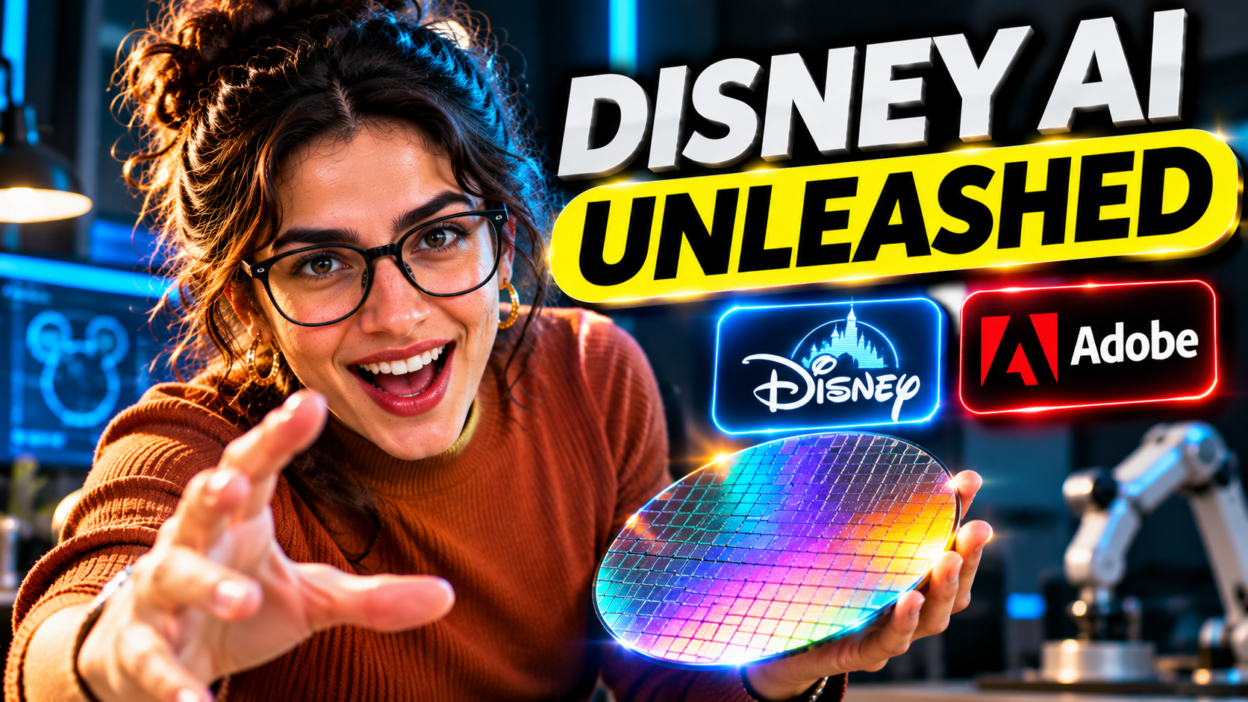
Disney has teamed up with Adobe to build custom generative AI tools that turn artists’ rough hand sketches into polished concept art in seconds. Built on Adobe Firefly Foundry and trained on Disney’s private IP archives, the system targets park design and studio workflows, accelerating production while reigniting creative debates.
The Mouse House Goes All In on Custom Generative AI
For decades, Walt Disney Imagineering has relied on world-class illustrators spending weeks, sometimes months, refining concept art for theme park rides, cruise ship venues, and studio sets. An artist would sketch a thumbnail, lay down base colors, tweak the lighting, and paint dozens of variations just to see what worked.
Now, Disney has named Adobe its official AI Innovation Partner. At the center of this multi-year deal is a proprietary sketch-to-image system built through Adobe Firefly Foundry. Instead of feeding text prompts into a generic web scraper, Imagineering artists upload their own hand-drawn line sketches. The custom AI fills in lighting, textures, and scenic details based on Disney’s existing visual style guides.
The result? Concept explorations that used to take entire quarters can now happen across a single afternoon.
Key Takeaways from the Disney-Adobe Partnership
- Sketch-Driven Pipeline: Human artists still draw the initial composition, but the AI handles the heavy lifting of shading, texturing, and rendering.
- Private Disney IP Vault: The models run on Disney’s proprietary creative assets (including franchises like Frozen, Moana, and Cars), keeping the output on-brand and free of open-web copyright risks.
- Imagineering First: Walt Disney Imagineering Research and Development is piloting the tech to blueprint attractions, lands, and cruise experiences.
- StudioLAB and ESPN Expansion: StudioLAB (The Walt Disney Studios) and ESPN Edge are testing similar custom Firefly pipelines for visual development and sports media archives.
How the Sketch-to-Art Workflow Actually Functions
Many digital painters have mixed feelings about prompt-to-image generators like Midjourney because text prompts take away fine motor control. You type a description, cross your fingers, and hope the composition resembles what was in your head. It often doesn’t.
Disney’s approach tackles that frustration directly. By anchoring the generation to an artist’s original line art, the human creator dictates perspective, character posture, focal length, and silhouettes. The AI acts like an ultra-fast digital render assistant, applying Disney-approved materials, atmospheric fog, and cinematic lighting to match the hand-drawn sketch.
As we covered when examining how AI speeds up design but dilutes creative control, the speed gains of generative tech often arrive with real tradeoffs for creative workers. Keeping the sketch as the source file is an attempt to keep artists in the driver seat, even if the finishing work happens through neural networks.
Traditional Concept Art vs. Disney’s Firefly Pipeline
Here is how the new workflow stacks up against classic visual development:
| Stage | Traditional Workflow | Disney-Adobe AI Pipeline |
|---|---|---|
| Initial Sketch | Hand thumbnailing in Photoshop | Hand thumbnailing in Photoshop |
| Rendering | Days of manual painting and lighting | AI-rendered lighting in seconds |
| Style Control | Cross-checking style bibles by hand | Trained strictly on franchise IP |
| Revisions | Repainting large asset layers | Iterating prompts on the base sketch |
The Pros and Cons for Artists and Studios
Whenever an entertainment giant embraces AI, excitement and anxiety arrive in equal measure. Let’s look at the genuine upsides and downsides of this rollout.
The Advantages
- Unmatched Exploration Speed: Designers can test twenty lighting scenarios or thematic color palettes during a morning pitch meeting without burning out late into the night.
- Commercially Clean Data: Because Firefly Foundry trains exclusively on Disney-owned IP and licensed assets, Disney avoids messy public copyright lawsuits.
- Preserves Compositional Intent: Starting from rough sketches respects human staging choices far better than raw text prompting.
The Drawbacks
- Headcount Pressure on Junior Roles: Polishing sketches and generating iterations has traditionally served as the training ground for junior concept artists and visual development apprentices.
- Risk of Stylistic Sameness: If every Imagineer relies on the same custom model weights, park designs could risk falling into a repetitive house style.
- Cultural Friction: Many working animators and illustrators view any generative AI adoption by major studios as a step toward eroding human craft.
What This Means for the Future of Concept Design
Disney calls this tool an accelerant for human imagination, not a replacement. In the near term, senior art directors will likely love being able to visualize complex theme park ride layouts before committing multi-million dollar engineering budgets.
Yet the broader industry will watch this partnership closely. If Disney proves that a studio can cut months off pre-production using sketch-to-image models, competitors from Universal to Warner Bros will follow suit with their own IP vaults. The artists who thrive in this next chapter will be the ones who master rapid sketching and understand how to steer these custom enterprise engines without losing their personal creative voice.
Frequently Asked Questions
What does the Disney and Adobe AI partnership do?
Adobe is building custom AI models through Firefly Foundry trained exclusively on Disney’s intellectual property, allowing creators to turn hand-drawn sketches into rendered concept art in seconds.
Are these Disney AI models trained on public internet art?
No. These models are proprietary and private to Disney. They are trained strictly on Disney’s internal creative archives, character designs, and style guides to ensure commercial safety and legal compliance.
Which Disney divisions are using these tools first?
Walt Disney Imagineering Research and Development is piloting the sketch-to-image tool for theme parks and cruise lines, while StudioLAB and ESPN Edge are testing custom workflows for film and sports media.
Will this AI tool replace concept artists at Disney?
Disney emphasizes that the tool assists human artists by taking their initial sketches as inputs. However, creative unions and illustrators remain watchful about its potential impact on junior roles and production headcounts.