

Overview
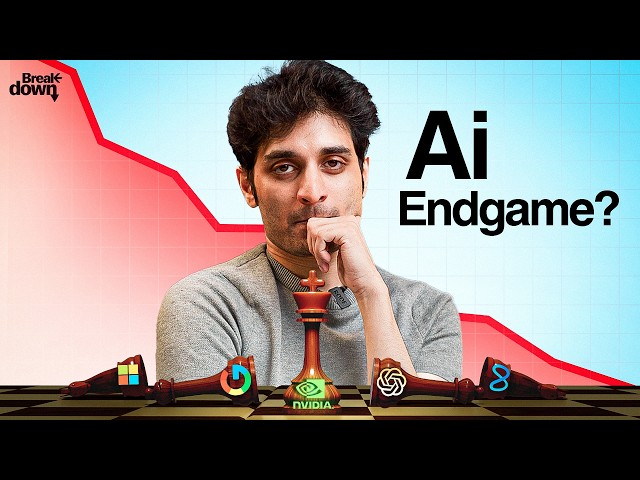
The rise of generative AI has sparked a heated debate: are we in the midst of an AI bubble, or is AI genuinely transforming the world in ways we can’t yet imagine? Drawing insights from Benedict Evans’ extensive report “AI Eats the World,” this blog delves into the current state of AI, lessons from past technology shifts, how big tech and businesses are investing, and how these dynamics might shape our daily lives and the broader economy. If you’ve ever wondered whether AI is overhyped or on the brink of a real breakthrough, read on for a grounded analysis enriched with market data, historical parallels, and critical business questions.
The Platform Shift: Every 10–15 Years, Tech Transforms
History tells us that the technology landscape undergoes fundamental change every decade or so. The journey from mainframes to PCs, from the web to smartphones, and now the emergence of generative AI, all represent pivotal “platform shifts” that redefine jobs, disrupt industries, and create new winnersand losers. Benedict Evans argues that generative AI is the next such platform shift, but as with those before it, predicting who will ultimately succeed remains elusive.
Each shift initially creates a new “gold rush.” Generative AI tools, like large language models (LLMs), have shifted the focus of both innovation and investment, making AI the new center of gravity for tech startups and established businesses alike. Yet, as excitement mounts, skepticism grows louder, echoing past doubts about the internet and smartphones. Are we just repeating history?
Inside Tech: Bubbles, Winners, and Capital Expenditure
As with every tech boom, there’s both hype and anti-hype. Investors have poured massive capital into generative AI, fueling innovation but also, perhaps, inflating a bubble. Tech giantsincluding Microsoft, Google (Alphabet), Meta, Amazon, and even Oracleare investing hundreds of billions in infrastructure, data centers, and AI chips. Nvidia, the linchpin for AI hardware, has seen unprecedented demand as companies scramble to prepare for the future.
Reflecting on platform shifts, Evans draws attention to key patterns:
- No guaranteed winners from past successes: Microsoft dominated PCs but missed the smartphone revolution, losing ground to Apple and Android. Now, past winners scramble to avoid irrelevance by doubling down on AI.
- High-stakes experimentation: Unlike the predictable cycles of hardware improvements, AI’s trajectory is uncharted. LLM innovations are nonlinear and unpredictabletoday’s best model may be surpassed within months.
- The cost dilemma: The cost of advancing AI, particularly in infrastructure and computation, is so steep that even hyperscalers are stretched. Companies like Oracle are pushing the limits, spending more than 100% of revenues just to stay in the game.
Furthermore, the interconnected web of investments among AI labs, chip manufacturers, and major platforms reveals a complex dynamic. Companies are hedging their bets, collaborating with competitors to sustain progress and mitigate existential risks.
Distribution, Commoditization, and Network Effects
As more AI models approach near-identical performance, the key question shifts from technology to distribution and brand. Historically, strong network effects (like the social pull of Facebook or the ecosystem lock-in of Windows) have created moats around market leaders. With generative AI, however, users can easily switch between tools like ChatGPT, Claude, and Geminiunless new network effects or platform lock-ins emerge.
OpenAI is acutely aware of this and is actively building featuressuch as Sora’s multiplayer video capabilitiesto lay the foundations for stronger user lock-in. The AI race has turned into a battle not just for the best technology, but for the most recognizable brand and widest distribution. At present, ChatGPT leads with over 800 million weekly users, yet only about 5% are paying. This underscores another challenge: monetization and the real value users perceive in these tools.
Unlike previous tech eras, current AI models are rapidly commoditizing. The battle now is about who can earn user trust, tell the best story, and provide value through seamless experiencesa theme that holds true for both consumer and enterprise AI products.
Outside Tech: How Should Traditional Industries Respond?
For those outside core technology sectorsreal estate, agriculture, retailthe main question is: what is our AI strategy? According to Evans, the roadmap is evolving, but leading companies are using AI to:
- Automate routine tasks: AI has proven value in coding, marketing, customer support, and generic automationareas where small errors are acceptable but productivity gains are significant.
- Experiment with new products: Many companies are running pilots or trials integrating AI, though actual large-scale deployments remain at an early stage.
- Redefine workflows: As AI gets embedded in existing tools (like embedding AI in WhatsApp or business software), the technology becomes less about novelty and more about seamless value addition.
Perhaps the biggest immediate impact has been in marketing, advertising, and content creation. AI’s ability to rapidly generate personalized ads and content at scale is already shifting industry dynamics. This “infinite intern” effectdeploying thousands of AI instances to perform nuanced, repetitive tasksraises new questions about error tolerance and where human oversight is most critical.
Bubbles and the Long-Run: Lessons from the Past
Drawing on the history of the internet and smartphone booms, Evans reminds us that early skepticism is no predictor of long-term impact. The internet, once dismissed as a bubble, is now woven into daily life and commerce worldwide. Similarly, while many companies failed in earlier revolutions (Yahoo, Netscape), the foundational technology reshaped society and business.
This time, the risks are larger and the questions are harder:
- Who will capture the most value: the model makers, the distributors, the infra providers, or the super-specialized SaaS startups?
- If models become commodities, will brand and user experience become the primary differentiators?
- How can businesses ride the waves of experimentation, learning, and rapid technological progress?
Conclusion
So, is AI a bubbleor is it truly eating the world? The answer is nuanced. While current market exuberance carries the hallmarks of a bubblefrenzied investment, unpredictable returns, and winner-takes-all gambitshistory suggests that every bubble, even if it bursts, leaves behind transformative change. Generative AI is already reshaping industries, work, and our daily digital experience. The long-term winners may not be clear today, but what is certain is that the AI revolution is underway, and its ultimate impact will eclipse the waves of hype and skepticism alike.
As with every technology shift, adaptability, experimentation, and a focus on real-world use cases will remain the best compass for navigating the evolving AI landscape.
Note: This blog is written and based on a YouTube video. Orignal creator video below: