Overview
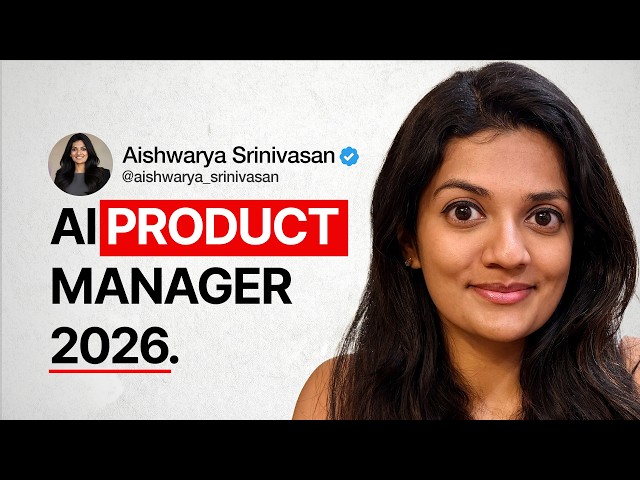
The demand for AI Product Managers (AI PMs) is skyrocketing as businesses across the globe integrate advanced artificial intelligence into their operations. With 2026 shaping up to redefine what it means to manage AI-driven products, the journey to becoming an AI PM has changed drastically. If you’re aspiring to break into this challenging and well-compensated career, understanding the new landscape and mastering both product management and AI fundamentals is essential. This comprehensive roadmap will guide you step-by-step, dispelling common pitfalls and ensuring you focus on the skills that truly matter.
The Evolving Role of AI Product Management
AI Product Management in 2026 isn’t the same as it was a few years ago. Gone are the days when a baseline understanding of machine learning models and basic collaboration with data teams were enough. Today, AI PMs are expected to navigate the entire AI product stack from prompt engineering and retrieval augmented generation (RAG) to AI agents and evaluation frameworks. The shift is fundamental: you’re not just a feature owner anymore, you’re a system designer responsible for delivering reliable and responsible AI experiences.
Crucially, AI PMs must:
- Possess hands-on familiarity with modern AI tools and workflows
- Own the product’s full feedback and evaluation loop
- Design for autonomy, accountability, and user trust in agentic systems
- Integrate responsible AI practices as core design constraints from day one
The expectations have shifted, elevating the level of technical depth, system thinking, and real-world experience required to excel.
Step 0: Master Product Management Fundamentals (2 Months)
No matter your enthusiasm for AI, skipping foundational product management skills is a mistake. Strong AI PMs are, first and foremost, skilled at the craft of product management. Before diving into advanced AI, invest roughly two months on the essentials:
- Writing effective Product Requirement Documents (PRDs)
- Defining impactful user stories
- Thinking in terms of metrics and outcomes
- Running discovery sprints and shipping usable products
Leverage top resources like Inspired by Marty Cagan and Lenny Rachitsky’s newsletter. Apply what you learn by actually building a mini product or tool, owning every aspect from defining the problem to measuring results. Write at least one complete PRD as a showcase piece; this practical ownership is what sets strong PMs apart from the rest.
Step 1: Learn the AI BasicsKeep It Practical
Resist the urge to collect endless certificates or dive deep into theory before you gain experience. Instead, focus on acquiring practical AI concepts that matter in a product context:
- Understand what an AI model is, and the difference between training and inference
- Grasp concepts like fine-tuning vs. prompt engineering
- Learn why vector databases matter, especially for RAG applications
- Recognize how latency impacts user experience
Don’t limit yourself to passive learning. Spend hands-on time with AI tooling such as OpenAI Playground, Claude, and at least one vector database. Recommended resources include Andrej Karpathy’s “Neural Networks: Zero to Hero” for foundational intuition and DeepLearning.AI’s applied short courses for practical exposure. Real engagement with these tools earns you the vocabulary and problem-solving mindset central to modern AI product development.
Step 2: Build Product Intuition for AI
Traditional product intuition doesn’t always translate to AI products, which behave probabilistically and can surprise both users and developers. Developing strong AI product intuition means:
- Analyzing leading AI products (ChatGPT, Claude, Perplexity, Notion AI) from a PM’s perspective
- Understanding how these products handle failures, hallucinations, and core user problems
- Deliberately stress-testing products and system prompts to learn their true reliability
Devote 3–4 weeks to purposeful deconstruction (at least one product per week), identifying what makes AI valuable, trustworthy, and effectiveor simply a gimmick. This structured curiosity becomes a competitive advantage when setting product directions or discussing trade-offs with stakeholders.
Step 3: Ship a Simple AI Product
One of the most critical steps is to build and ship something tangible. Don’t wait for perfection or viralityshipping even a small AI product unlocks first-hand lessons that no course can match. Consider these ideas:
- A Generative AI résumé assistant to draft tailored applications
- A customer feedback analyzer that runs LLM-powered sentiment analysis over CSV reviews
- A RAG-based knowledge search engine for document retrieval
Before building, write a thorough PRD. Then, in weeks 2–5, develop and iterate on your product. From week 6 onwards, document your decision-making process, iterations, and what you learned for your portfolio. Presenting both the end result and your thought process is what stands out to employers and interviewers.
Step 4: Develop MLOps & AI Infrastructure Fluency
Modern AI products demand awareness of their operational and infrastructural context. While you don’t need to be a machine learning engineer, you must understand key concepts like:
- Designing and interpreting evaluation frameworks
- Balancing model performance, latency, and inference costs
- Ensuring observabilitymonitoring, logging, and post-deployment evaluation
- Implementing frameworks for responsible AI and handling failure modes”
Start with targeted resources such as Coursera’s “ML Engineering for Production” specialization to learn how robust AI features are built and maintained in production.
Step 5: Get Visible and Apply
Skills alone won’t get you hiredyou need visibility and a network. Share your portfolio and product breakdowns on professional platforms like LinkedIn or within AI-focused communities. Consistency and engagement are more impactful than a massive following. Additionally, begin applying for roles once you have shipped a product and mastered the fundamentals. Early interview attempts accelerate your learning and keep you attuned to industry expectations.
Conclusion
Breaking into AI Product Management in 2026 requires more than deep technical theoryit demands holistic product ownership, practical AI literacy, an intuition for AI-powered user experiences, and real world shipping experience. Focus on acquiring and demonstrating these skills through deliberate projects, strong documentation, and public engagement. The bar is higherand the opportunity greaterthan ever before. With dedication, hands-on learning, and smart networking, you can position yourself for success in one of tech’s fastest-evolving career paths.
Note: This blog is written and based on a YouTube video. Orignal creator video below: