

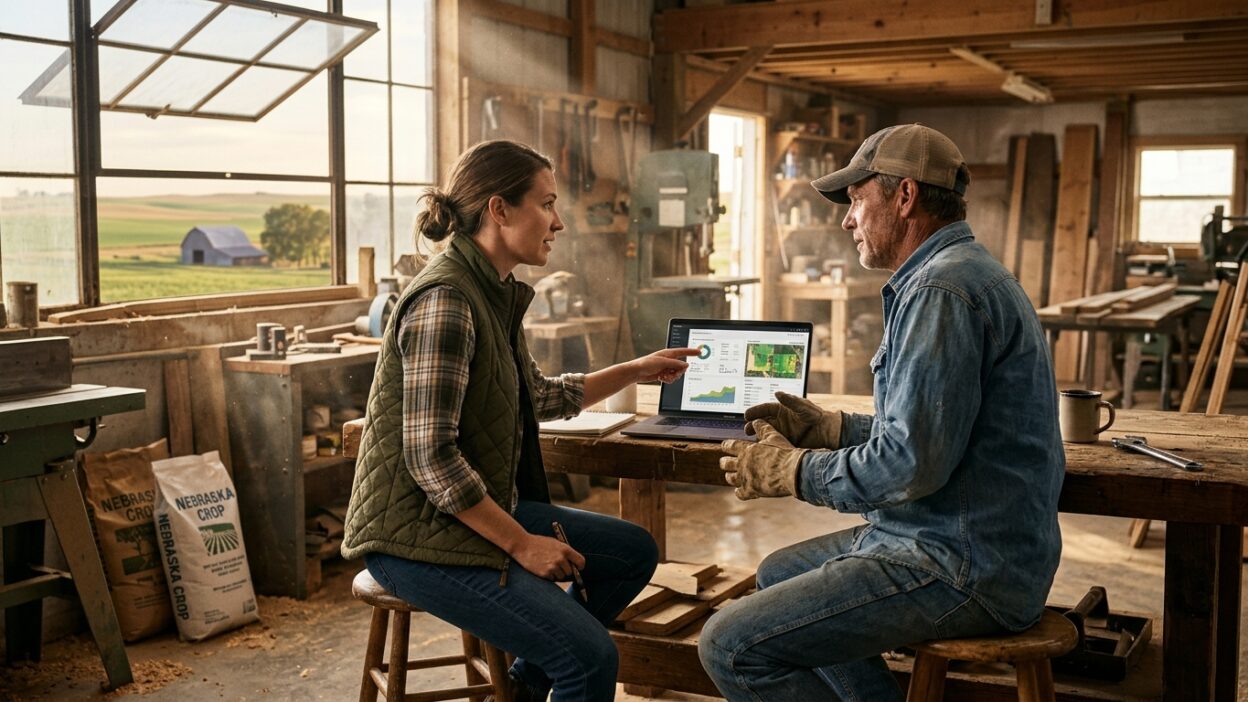
More than half of rural Nebraskans now use artificial intelligence tools, doubling adoption from 27% to 55% in two years. According to the latest Nebraska Rural Poll, younger residents lead this surge, though deep skepticism about accuracy and reliability keeps many from relying on AI for critical tasks.
It is easy to assume artificial intelligence belongs strictly to Silicon Valley tech labs or high-rise office towers. Yet recent numbers from the heartland tell a completely different story. Real people in small towns, farming communities, and rural counties are putting AI to work on everyday problems, even if they remain cautious about trusting every word it spits out.
Key Takeaways: What the Nebraska Rural Poll Found
- Adoption has skyrocketed: 55% of rural Nebraskans surveyed have tried an AI tool, more than doubling the 27% recorded in 2024.
- The generation gap is real: Over 75% of respondents between ages 19 and 39 have used AI, compared to only 23% of seniors aged 65 and older.
- Income and education influence usage: Higher household income and college degrees correlate with much higher rates of experimentation with generative tech.
- High curiosity, low trust: A majority of respondents rarely or never use generative AI to learn about specific subjects, showing that users still question its reliability.
Breaking Down the Numbers: Who Is Actually Using AI?
Conducted by the University of Nebraska-Lincoln, the annual Nebraska Rural Poll gives us one of the clearest looks at how tech trends unfold outside metropolitan centers. Jumping from roughly one in four people to more than one in two within twenty-four months is a rapid shift by any standard.
Unsurprisingly, age makes the biggest difference. Younger adults who grew up on mobile apps have had zero hesitation trying conversational assistants for everyday tasks like drafting emails, organizing schedules, or brainstorming ideas. If you are experimenting with generative assistants yourself, our guide on mastering advanced ChatGPT features walks through prompt tricks that give you practical, reliable answers instead of generic guesses.
At the other end of the spectrum, older Nebraskans remain noticeably hesitant. With only 23% of seniors taking part, the data highlights a clear digital divide. In many rural communities, access to practical training and tech support makes all the difference in whether someone feels comfortable touching these tools.
The Trust Gap: Curiosity Outpaces Confidence
While adoption has doubled, enthusiastic trust has not kept pace. Nebraskans are testing these apps, but they are not handing over the keys to their businesses, farms, or studies just yet.
Most respondents reported that they rarely or never rely on generative AI to research serious topics like education, finance, or health. In communities where practical results matter and mistakes carry actual costs, people understand that chatbots can hallucinate facts. We saw a similar dynamic when looking at how Texas schools use AI in the classroom, where teachers and students balance powerful learning shortcuts against the constant risk of incorrect answers.
Pros and Cons of Rapid AI Adoption in Rural Towns
Widespread adoption brings clear perks along with notable hurdles that local leaders and residents need to weigh:
The Upsides
- Productivity for small teams: Solo entrepreneurs, community non-profits, and family businesses can handle paperwork, marketing copy, and administrative tasks without hiring extra staff.
- Faster problem solving: From troubleshooting equipment error codes to summarizing state regulations, workers can cut research time in half.
- Leveling the economic field: Rural professionals get access to the exact same cutting-edge computing tools as their big-city peers.
The Downsides
- Widening generational splits: Seniors risk being left behind as local services and communication channels incorporate automated tools.
- Risk of bad information: Trusting unverified AI outputs for agricultural planning, taxes, or schoolwork can create costly headaches.
- Broadband bottlenecks: Many remote areas still battle spotty high-speed internet, complicating smooth cloud tool usage.
What This Means for the Future of Rural Tech
The message from the Nebraska Rural Poll is simple: the novelty phase is over. Rural residents are not waiting for permission to test modern software, but they are approaching it with healthy Midwest skepticism.
As AI continues to work its way into accounting suites, machinery dashboards, and classroom curricula, the challenge is shifting from access to digital literacy. Teaching people how to verify facts, write better prompts, and identify tech limitations will determine whether these tools become genuine long-term assets for rural communities.
Frequently Asked Questions
How many rural Nebraskans currently use AI tools?
According to the latest Nebraska Rural Poll, 55 percent of rural Nebraskans have used an artificial intelligence tool, up sharply from 27 percent in 2024.
Why are rural residents cautious about trusting generative AI?
Most residents recognize that AI tools frequently hallucinate or generate inaccurate facts. Because of this, respondents report rarely relying on AI for critical subjects like education, healthcare, or high-stakes business choices.
Which demographic in rural Nebraska uses AI the most?
Younger adults lead adoption by a wide margin. Over 75 percent of rural Nebraskans aged 19 to 39 report using AI, compared to only 23 percent among those aged 65 and older.
What influences AI adoption rates outside big cities?
Beyond age, household income and education levels are the strongest predictors. Residents with higher household incomes and college degrees report significantly higher adoption rates than those with lower incomes or high school educations.